One of the ever present myths pushed by everyone around is that food that is healthy has to taste bad. Or at least it doesn't taste as good as food that is bad for us. Understanding what the motivations are behind these beliefs and why they exist are important to dismantling their power. Believing that bad food tastes good, simply wires your mind to eat poorly.
Since the time we are children, food becomes a motivator for our actions. It is used as a punishment or reward for our actions--"Eat all your peas, or you get no desert!", or "You can go to bed without dinner!" By setting up food as a punishment or reward for actions, it is endowed from our early childhood with far too much power in our lives. Food must stop controlling, and be controlled. Food is simply nourishment and nothing else.
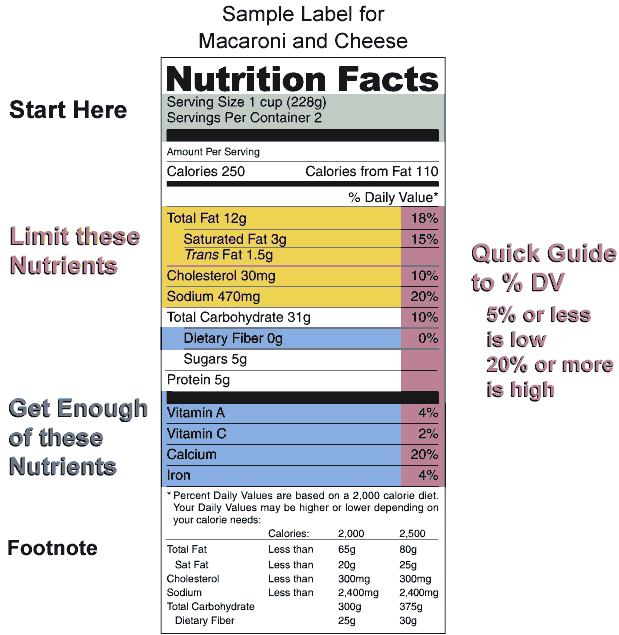 |
| Nutrition Facts Label on Food in the US |
More than a few people that find pork rhines disgusting. Most individuals would find eating a stick of butter revolting. Neither of these foods are conducive to a healthy lifestyle, and a sizable amount of individuals would agree they also don't taste particularly good. A large number of people find strawberries appealing. Strawberries are also very healthy and low in calories compared to other fruits. These are only a few counter examples that demonstrate the fallacy of assuming "good" food tastes bad.
What determines taste has more to do with one's exposure to a gamut of tastes, rather than some inherent goodness or badness. Just as the eyes and brain symbiotically learn to interpret the world visually in infants from the world around them, taste (which is really a combination of your taste buds and sense of smell) develops as you are exposed to different foods. That which tastes good, is that to which we have learned is supposed to taste good. Go to Calorie Count and take the food calorie test, and see how well eyes are at determining the calorie content of food. The results will likely reinforce the fact that your eyes are light wavelength sensors, not calorimeters for measuring food energy. Nothing to fret about--just as a ruler is useless for measuring weight, the eyes are the wrong tool for the job.
Healthy eating has to do with finding food that tastes good, limiting calorie intake, and choosing foods that satiate. It is far more satiating to eat a bowl of Greek yogurt with fruit, than a tiny candy bar. While the candy bar has over 300 calories, it is no more than an ounce worth of food. The bowl of yogurt and fruit are more than 10 ounces of food, and yield less than 250 calories. Ten times the food mass, with less energy. This is how calorie density is derived for judging the overall healthfulness of a meal. It is possible to eat healthy, and eat foods that taste good.
